

They are small, naturally portioned and easy to add to soups, meal kits, vegetable blends and seasoning products.
But peas are also one of those ingredients where the condition of the raw crop can still be clearly noticed after freeze-drying.
Two batches produced with the same equipment and under the same nominal specification may still differ in:
- green color;
- natural sweetness;
- hardness;
- skin texture;
- whole-piece rate;
- powder generation.
In many cases, the difference starts before the peas enter the freeze dryer.
It starts in the field.
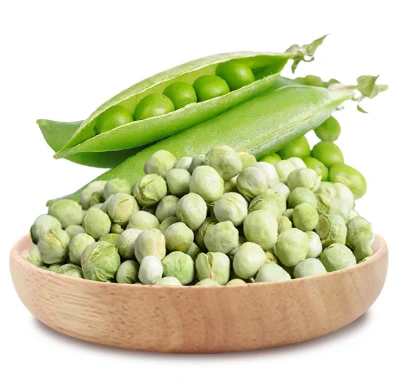
Peas Have a Relatively Short Ideal Harvest Window
Green peas continue to change as they mature.
At an earlier stage, the peas tend to be:
- smaller;
- more tender;
- sweeter;
- brighter in color.
As they continue to mature, the seeds become fuller and firmer.
At the same time, starch development increases and the eating texture gradually changes.
This means that "larger peas" do not automatically mean "better peas".
For industrial freeze-drying, the target is usually not simply maximum size.
The raw material needs to reach a suitable balance between:
size + sweetness + tenderness + structural strength.
Harvest too early and the peas may be undersized.
Harvest too late and the final freeze-dried peas may become harder, less sweet and more noticeable in the skin.
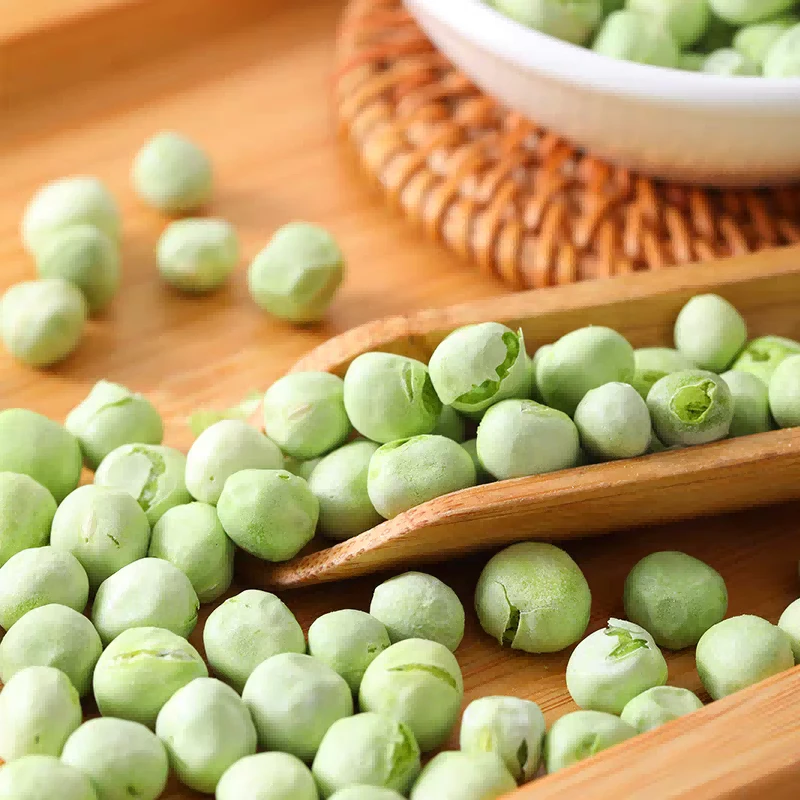
Bright Green Color Starts with the Raw Pea
Color is one of the first things buyers notice when opening a carton of freeze-dried peas.
But freeze-drying itself cannot turn an unsuitable raw pea into a bright green finished product.
The starting material matters.
Pea color can vary according to:
- variety;
- maturity;
- growing conditions;
- harvest timing;
- storage before processing.
This is why color control should begin with raw material selection rather than relying only on adjustments during processing.
For food products where peas remain visible - such as instant noodles, cup soups and vegetable meal kits - consistent raw material selection becomes especially important.
Sweetness and Texture Usually Move Together
For peas, sweetness and maturity are closely related.
Young green peas naturally contain more sugars. As the crop matures, part of these sugars are converted into starch.
From a food formulation point of view, this can create a noticeable difference.
- A younger pea may provide:
- cleaner sweetness;
- softer texture;
- lighter bite.
A more mature pea may give:
- stronger body;
- firmer texture;
- more starchy mouthfeel.
Neither is automatically wrong.
The better choice depends on how the peas are being used.
For an instant soup with a short preparation time, a tender pea may be more suitable.
For a meal kit that goes through longer cooking, slightly firmer raw material may sometimes provide better structural stability.
This is one reason application information is useful when developing a pea specification.

Whole Peas and Pea Granules Serve Different Jobs
One mistake in ingredient selection is treating whole peas, broken peas and pea granules as different grades of the same product.
In practice, they can serve very different functions.
Whole freeze-dried peas
Whole peas are mainly selected when the vegetable needs to remain visible.
Typical uses include:
- instant noodles;
- cup soups;
- ready meals;
- meal kits;
- mixed vegetable packs.
Appearance and whole-piece consistency are more important in these products.
Pea granules
Granules are useful when manufacturers need peas to distribute more evenly through a formulation.
They can work well in:
- dry soup blends;
- seasoning mixes;
- savory fillings;
- vegetable powders and blends;
- formulated dry ingredients.
The smaller format also makes dosing and mixing easier on some production lines.
For available industrial particle formats, you can refer to our Freeze Dried Pea Granules page.
Powder at the Bottom of a Carton Tells You Something
After long-distance transport, some fine material may collect at the bottom of the inner bag or carton.
A small amount is expected with brittle freeze-dried vegetables.
But if the fine-particle level is noticeably high, several possibilities should be checked:
- peas may be too fragile;
- grading may be insufficient;
- handling may be too aggressive;
- packing density may be unsuitable;
- cartons may be exposed to excessive compression.
For buyers receiving regular container shipments, comparing fines between batches can provide useful information about transport and handling consistency.
This is particularly relevant when the product is sold as whole freeze-dried peas rather than as granules.
Peas in Mixed Vegetable Products Need Size Balance
Peas are naturally round, while carrot, corn, onion and other vegetables have very different shapes and densities.
This matters during dry blending.
If one component is much smaller or denser than the others, segregation may occur during:
- mixing;
- conveying;
- filling;
- transport.
As a result, the ratio seen in individual retail packs may vary even when the original batch was blended correctly.
For mixed vegetable projects, pea size should therefore be considered together with the dimensions and bulk characteristics of the other ingredients.
The goal is not only to make the mixture look good in one sample bag.
It needs to remain reasonably uniform when produced and filled at scale.
The Better Pea Specification Starts with the Finished Food
For industrial buyers, specifications such as "whole green peas" or "3–5 mm pea granules" are useful starting points.
But they do not describe everything that affects production performance.
When developing a project, it is also worth considering:
- whether peas remain visible in the finished food;
- required cooking or soaking time;
- preferred tenderness;
- natural sweetness expectations;
- acceptable whole-piece ratio;
- whether peas are blended with other vegetables;
- whether automated filling is used.
These details help determine what kind of raw pea and finished format is actually suitable.
Freeze-dried peas are not complicated because they require many processing steps.
They are complicated because a small difference in the fresh crop can still be noticeable in the finished food.
That is why stable raw material selection matters as much as the drying process itself.


